5 signals every brand leader should be watching (not just those in luxury…)
At this month’s Luxury Outlook Summit 2026, an invitation-only meeting of global luxury leaders convened by Luxury Roundtable, candid conversations surfaced a clear set of signals with implications far beyond these elite logos.
Luxury brands are now experiencing the pressures affecting other sectors across the widening K-shaped economy: slower growth, polarized consumers, and heightened scrutiny around value.
What makes this instructive to all brands is that ultra-high net worth individuals (UHNWI) are the most discerning consumers. The strategies luxury brands use to win with them give a sneak peek into what it will take to overcome objections as pressures intensify across the broader economy.
1. Market contraction changes the math
Luxury is no longer growing by adding more consumers. Two leaders from Kearney – Nora Kleinewillinghoefer and Katie Thomas – shared some interesting stats. First, there are roughly 50 million fewer luxury consumers globally than just a few years ago. What’s more, about 2 percent of customers account for nearly 45 percent of total luxury spend.
The implication: each customer carries more weight, and every decision has greater consequence. Growth now depends on delivering higher relevance to a smaller, more discerning audience.
That dynamic is not unique to luxury. As markets tighten, brands across categories will benefit from sharper focus. Clearer choices about who they are for, what they prioritize, and what they stop doing altogether create stronger, more durable customer relationships.
2. Customer avatars no longer live within a single segment
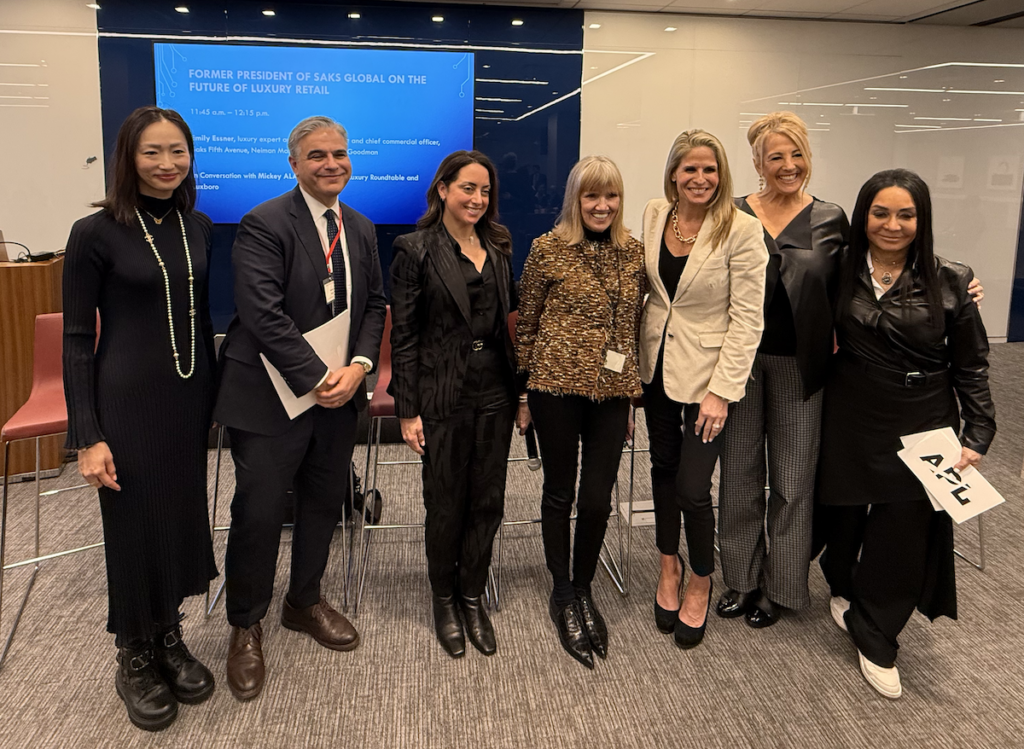
Marie Driscoll, adjunct professor at The New School and FIT, referenced an interesting reality: luxury and value now coexist within the same customer. The same person may dine regularly at Michelin-starred restaurants while shopping for groceries at Costco – and be proud of both decisions.
Price hike fatigue is a meaningful driver of this changing behavior. Even consumers with significant spending power are increasingly pausing to decide whether or not something feels “worth it.” Across income levels, people are trading up and trading down with intention, often at the same time.
Traditional customer avatars assume stable, predictable behavior. But in a more volatile economic environment, behavior becomes situational. Consumers are not pulling back everywhere. Rather, they are exercising restraint selectively – guided by context, relevance, and perceived brand value.
3. Closing the gap between people is the most undeveloped opportunity
One of the biggest aha moments surrounded this observation: the most undeveloped space in luxury is the space between people. (And it’s easy to extrapolate that meaning to any segment.)
One UHNWI is typically connected to 70 or so economically similar peers within their personal and professional orbit. Interest begins to ripple through relationships long before it shows up as a transaction. This is a place for brand influence.
Cristina Cheever, known for her impact at luxury brands like Aston Martin, Porsche, and Robb Report, noted something significant: the evolving role of brand as a connector. She emphasized that influential brands sit increasingly at the center – not on a pedestal – creating connective experiences. Those experiences can be between brand and client; leadership and client; and even client to client.
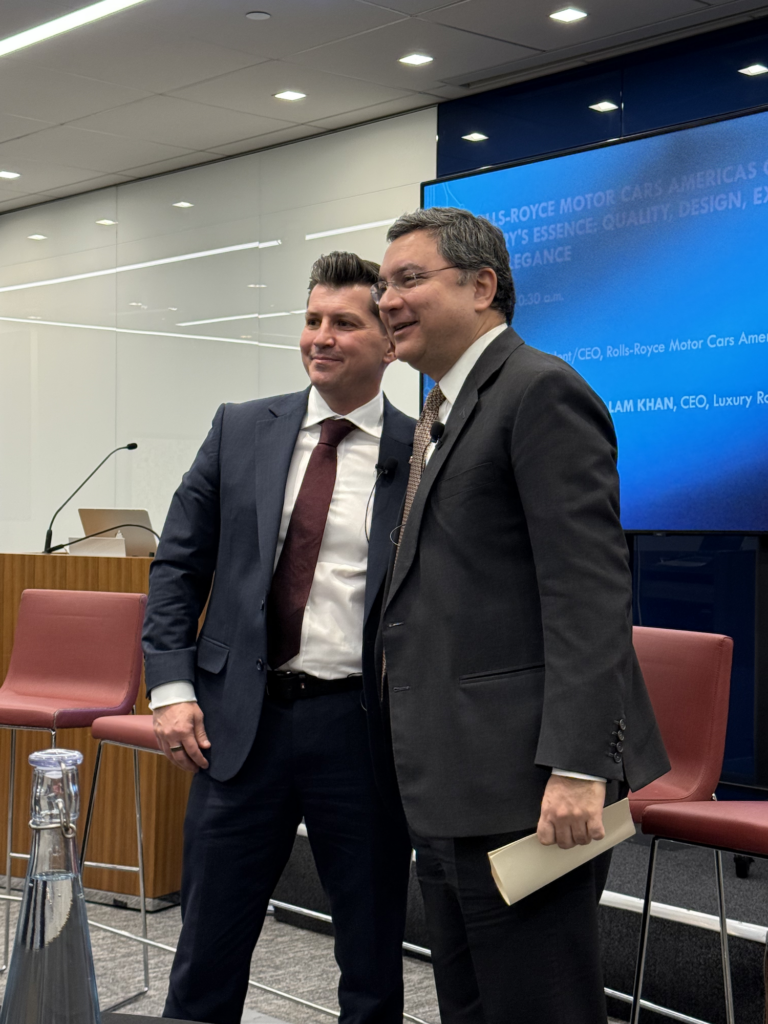
That perspective was reinforced by Jon Colbeth, President & CEO of Rolls-Royce Motor Cars Americas. He talked about Whispers, “the world’s most exclusive app” that is available only to Rolls-Royce owners. The app closes the gap by providing direct access to Colbeth and other company leaders, dealers, and fellow owners. This has created a highly connected community around the brand. When asked if there have been any “Whispers Weddings” yet, Colbeth said no (but admitted the app has sparked some love connections).
4. Experience must go beyond the expected
As elevated experiences become table stakes across categories, luxury brands are being pushed to define value in more subtle ways that go beyond visible indulgence. Leona Qi, President of VistaJet, noted that true luxury with her brand means “life is not interrupted from ground to sky.”
VistaJet is laser-focused on designing the experience around continuity by anticipating needs across the entire journey. This means travel with VistaJet enhances rather than disrupts the lives of her elite clientele. Industry-forward amenities like onboard language tutoring for children ensure that time in the sky doesn’t mean time away from life.
Brands are increasingly judged on the thoughtfulness behind what they deliver – from ultra-luxury private jets to grabbing a morning coffee at Starbucks. Digging deeper into where friction exists and where meaningful value can be added is becoming a defining advantage across categories.
5. People are the brand
Mickey Alam Khan, CEO of Luxury Roundtable, put it succinctly, “All luxury has become hospitality.” That’s because hospitality is about people delivering a stellar experience – and the reality is that people make or break the brand at every level. Any brand. Because a single poorly handled moment can undermine years of positive experiences.
The name “Ritz-Carlton” is synonymous with premium service. Their Senior Director for Global Brand Management, Guillaume Benezech, challenged brands to move creative thinking into operations. He clearly conveyed that “brand” is not built by marketing alone, but by how people deliver the experience every day. Full stop.
People are the brand. That’s why S3 McMillan offers the Brand Inside program: to help organizations ensure their people, culture, and operations are aligned around what a brand truly stands for, so the experience delivered matches the promise made.
Want to know more about how Brand Inside can help your luxury or non-luxury brand improve your organization’s performance? Just send an email to hello@s3mcmillan.com